Wednesday, April 2, 2014
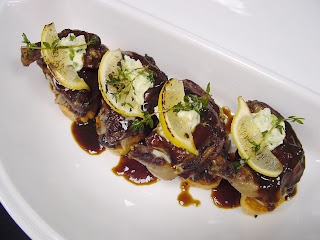
sichuan pepper roasted duck
Thursday, June 14, 2012
potted crab or instant noodles?
When the sun shines, so does the desire to be close to the water, and by beautiful default closer and fresher to some of our most wonderful food supplies. This is a great prepare-ahead dish that you can simply take out of the fridge half an hour before serving. If preparing in advance, make sure the crab meat is completely covered with the butter mixture, and keep the pots well chilled for up to two days. Fancy it up with a bit of sliced avocado, green apple, some green leaves and a rip of bread and all is good in the world.
Serves 4 on a sunny day
2 dressed crab (or 300g white and brown crab meat)
1 banana shallot (or 2 regular ones), peeled and finely chopped
4 tblsp sherry
Pinch of cayenne pepper
Pinch of freshly grated nutmeg
Sea salt and freshly ground black pepper
175g cold, unsalted butter, cut into cubes
1½ tsp Worcestershire sauce
Squeeze of lemon juice, according to taste
Handful of chives, finely chopped
Run your fingers through the crab meat to pick out any remaining bits of shell and cartilage. Wrap with cling film and chill.
Season well. Bring to the boil and let it bubble vigorously for about 2 minutes until the liquid has reduced to half.
Turn the heat to low and gradually whisk in the butter, a few cubes at a time. Leave it to simmer very gently for a few minutes, then remove the pan from the heat and let the flavours infuse as the butter cools.Sunday, September 18, 2011
Wagyu weekend treat
Pan-fried diced wagyu beef in teriyaki sauce
Tuesday, February 8, 2011
Barbecued rib eye steaks and summer vegetable skewers with a tangy lemon dipping sauce
Serves 4
4 x 200g rib eye beef steaks
4 globe artichoke hearts, cooked
For the dipping sauce
4 tblsp mayonnaise
3 tblsp Greek yoghurt
Pinch of cayenne powder
Zest and juice of 1 large lemon
If using wooden skewers, soak them in a bowl of cold water. Put all the vegetables into a bowl. Pick the leaves from the lemon thyme and toss through the vegetables with some freshly ground pepper and a generous glug of olive oil. Thread the vegetables alternately on to the skewers.
Season the beef and vegetables with salt just before you start barbecuing. Allow 10-15 minutes for the vegetable skewers on the barbecue, turning them regularly until the vegetables are tender and golden. Cook the steaks over a high heat, allowing 3-5 minutes on each side, then allow them to rest on a warm plate for 5 minutes.
For the dipping sauce, mix all the ingredients together in a small bowl, adding lemon juice and seasoning to taste. Serve the steaks on warmed plates with two vegetable skewers per person and the dipping sauce in small bowls on the side
Friday, January 8, 2010
Grilled honey prawns with noodle salad
When I go comfort at home, there's often noodles in the mix somewhere. Now Christmas and New Year's out of the way, it's time to get the diet back on track as best as possible, and this dish (or variations of it) I could easily eat a couple of times a week without any hint of boredom setting in. The arame seaweed in the noodle salad adds a subtle texture and a depth of flavour. I've done this recipe with chicken before too, but I had it with some fat prawns yesterday and it was the business.
1 tblsp honey
6 tblsp soy sauce
6 tblsp sake
1 fat clove of garlic, finely chopped
Zest of 1 lemon, finely grated
4-6 big prawns per person, shelled and cleaned
2 tblsp sesame oil
30g dried arame, shredded
240g vermicelli rice noodles
2 large carrots, peeled
4 inner celery stems, trimmed
2 bunches of chives, roughly snipped
1 large handful of coriander leaves
Place the honey, soy, sake, garlic and lemon zest in a small saucepan. Simmer gently for 3 minutes or until the honey has melted. Leave to cool until tepid.
Wednesday, November 11, 2009
Hainan chicken rice

Serves 4
A local specialty from the
Chicken
1 whole chicken, about 2kg
1 tsp salt
2 cloves garlic, peeled
4 slices fresh ginger, peeled
4 spring onions, trimmed
3 litres water
2 tblsp sesame oil
Sliced tomatoes for garnish
Sliced cucumbers for garnish
Coriander sprigs for garnish
Chicken rice
400g long grain rice
2 tblsp peanut oil
5 shallots, peeled and minced
5 cloves garlic, minced
1 litre reserved stock from cooking Hainan chicken
1/2 tsp salt
Wash chicken and remove excess fat. Rub the inside of the cavity with salt. Smash garlic and ginger slightly with the flat of a knife. Tie spring onions into a knot. Place garlic, ginger, and spring onions inside the chicken cavity.
Bring the water to a boil in a pot large enough to hold the chicken.
Add the chicken, breast-side down. Simmer, covered, 30-40 minutes, turning chicken halfway through the cooking process, until chicken tests done (juices from thigh should just run clear when pricked with a fork).
Carefully remove chicken, draining liquid from body cavity back into the pot. Reserve the stock to make chicken rice. Plunge the chicken into ice water for 5 minutes to stop the cooking process and tighten the skin. Drain, rub with sesame oil, and let cool to room temperature.
To serve, chop chicken into bite-size pieces (the Chinese do this bone and all) and arrange on a platter. Garnish with sliced tomatoes, cucumbers, and coriander sprigs.
To make the chicken rice, wash the rice and drain in a colander. Let stand 1/2 hour to dry.
Heat oil in a wok. Add the shallots and garlic. Stir-fry until fragrant. Add rice grains and stir-fry 3-4 minutes, until glossy and fragrant.
Transfer to a saucepan. Add the chicken broth and salt. Bring to a boil over high heat and boil until the liquid level evaporates to the level of the rice and steam holes appear. Turn heat to low. Cover and simmer for barely 10 minutes.
Serve the chicken with the rice, with chilli and garlic oil, dark soy sauce and chilli sauce, and a bowl of the remaining broth finished with a little chopped coriander.
Wednesday, November 4, 2009
Hot and sour scallop soup

Serves 4
Don’t let the long list of ingredients discourage you from trying out this delicious hot, sweet and sour soup, to which I’ve added fresh scallops as an elegant treat. As with most Chinese cooking, you will need to spend a little more time preparing the ingredients, but the actual cooking time is quite short.
1 litre fish or chicken stock
3 tblsp rice vinegar
3 tblsp light soy sauce
1 tblsp sweet chilli sauce
2 tsp caster sugar
5 shiitake mushrooms, stems removed and thinly sliced
1 small carrot, peeled and cut into thin strips
2.5cm fresh ginger, peeled and cut into thin strips
1 garlic clove, peeled and chopped
300g pack firm tofu, cut into small cubes
4 scallops, halved diagonally
225g tin bamboo shoots, rinsed and drained
2 tblsp cornflour, dissolved in 3 tbsp water
1 large free range egg, beaten
2 spring onions, trimmed and thinly sliced on the diagonal
Place the stock, vinegar, soy sauce, sweet chilli sauce and sugar in a pan and bring to a boil over high heat. Add the mushrooms, carrot, ginger and garlic, and adjust the heat to a gentle simmer. Cook for 5 minutes, or until the mushrooms and carrots are just tender.
Add the tofu, scallops and bamboo shoots. Stir in the cornflour mixture. Simmer until the soup is lightly thickened and the scallops are just cooked through, about 2-3 minutes. Slowly pour the beaten egg into the soup, gently stirring in a circular motion to create small ribbons of egg.
Ladle the soup into bowls, sprinkle with the spring onions and serve at once.
Monday, August 31, 2009
The old colony did us proud (part one)
Having just returned from a 7 day whirlwind trip, where amongst many other things, I dined in a collection of eateries from simple dai pai dongs to Michelin starred joints, and everything in between - revisited two favourite restaurants I'd been to before, and had I think 8 meals in places for the first time. No two the same, all utterly fantastic, so many flavours, so much inspiration....
I'm stuffed just recalling a few bits and pieces... more to follow soon...
Tuesday, July 28, 2009
Salt and chilli squid
Deep frying for me is a flash back home when I was younger. If it wasn't deep fried, then it was cooked to within an inch of its life in a pot, and that's where it all began. If squid isn't your thing, and I'm constantly surprised by how many say it isn't due to one previous average experience, then try this with strips of white fish instead. It's equally delicious.
You could eat this on a bed of rocket, with lime to squeeze over definitely not a throwback to the fish suppers of my childhood) Nowadays I like the squid best eaten really piping hot from the pan, as an informal stand up first course for a kitchen supper with friends while the rest of the meal is being assembled.
1kg squid, cleaned and cut into rings, tentacles left whole
2 tblsp fish sauce
1 lemon, juiced
1 tsp dried chilli flakes
1 tsp crushed coriander seeds
2 tblsp salt flakes, crushed
1 tblsp crushed white peppercorns
250g cornflour
Vegetable oil, for frying
Place the squid, fish sauce and lemon juice in a bowl and marinate for up to 30 minutes. Drain and pat dry.
Place the chilli, coriander, salt, peppercorns and cornflour in a large freezer bag, add the squid and shake well to coat.
Pour vegetable oil into a frying pan to the depth of about only 2cm. The pan should be no more than half full. Fry the squid a few pieces at a time, for about a minute, until crisp and light gold. Drain on kitchen paper and eat straight away
Wednesday, July 15, 2009
Five spice quail
Quail, one of the most underrated birds we can roast, which needs to be eaten with your fingers to be honest as there's no way a knife and fork can scrape off the meat from those little bones the same way our teeth can. It is difficult to know exactly what to serve on the side with something you eat in this manner; baked rice, cous cous or lentils all work here
4 oven ready quail
1 large clove garlic
1 tsp hot ground chilli powder
2 heaped tsp Chinese five spice powder
juice of 1 lemon
2 tblsp groundnut oil
Set the oven at 200°c/gas mark 6. Peel and mash the garlic. Put it in a bowl then stir in the ground chilli, the five spice powder, lemon juice and the oil.
Season generously with sea salt - a good half teaspoon. Dip the quail in and toss them gently round. You can leave it like this for several hours if it suits you, though just one will do.
Put the birds and any marinating juices into a small roasting tin. They should be close, but not actually touching. Roast them for 15 to 20 minutes, depending on their size, turning once.
The little birds will look quite dark after the full cooking time, but this is fine. Serve them piping hot with orange or lemon wedges to squeeze and some crusty bread.
Monday, June 22, 2009
Dumplings (Jiaozi)
670g plain flour
Suan zhi (garlic sauce)
5 cloves garlic
Put the flour in a large bowl and drizzle water onto it, mixing the flour. Then use your hands to form a large ball. Leave to rest for 30 mins. For the stuffing add the bai-cai to the pork, prawns, spring onion and ginger. Heat 2 1⁄2 tblsp of oil in a wok and when the oil is smoking add the eggs, moving briskly until they are golden and crispy. Add to the pork mixture with 2 tblsp of soy sauce, 7 tblsp of sunflower oil, 3⁄4 tblsp of rice wine, three pinches of salt and a drizzle of sesame oil.
To make the skins take a handful of dough, make it into a sausage 2.5 cm in diameter and cut into pieces 2.5 cm long. Form each piece into a ball, then flatten, making a disc about 3.5 cm in diameter. Then roll them (all 100) into circular dumpling skins about 7-8 cm in diameter (you can buy these if you must). Put 1 1⁄2 tsp of stuffing mix into the centre of each skin and press the edges together to form a half moon shape with the middle pushed together and the ends open.
Seal the corners by creating little concertina-like folds as you press the edges together: it is crucial they don't open during the cooking process.
To make suan zhi chop the garlic and add to the dark rice vinegar with a drizzle of sesame oil. I also add a tsp of brown sugar, 1 tblsp of soy sauce and 1⁄2 tsp of chilli oil.
To cook the dumplings boil a pan of water and carefully add 20 at a time - they will sink. Using a spoon stir the water (not the dumplings) to create a whirlpool which will encourage the dumplings to float. When they are floating put the lid on and let them cook for 2 minutes. When the water is really boiling add a little cold water and bring it back to the boil. Do this twice more then add a final drop of water. Remove the dumplings with a slotted spoon. Eat with the sauce - pick up your dumplings with chopsticks and bite off the end to let out the steam.
Saturday, June 20, 2009
Roast pork belly with five spice rub
Serves 4As much as I'm bursting to tell about the last 6 days in Hong Kong (I'm 4 hours off the plane as we speak) thought I ought to get the ball rolling with this little number seeing as I've been off line for all that time. When you shop for your pork, ask your butcher to score the skin of the pork for you - it is his job, not the cook's. This hatching of narrow lines through the skin not only helps the crackling to crisp nicely but makes carving a little easier. There is no gravy or even pan juices with this, so the oyster sauce greens are essential, but the crispy edged pork dipped in a tiny bit of mustard will make up for any lack of side distractions. So much more to come, so many old favourites and new discoveries to write about... once the jetlag's worn off...!
1.75kg pork belly, bones left in, scored
For the spice rub
For the greens
4 handfuls purple-sprouting broccoli, bok choi or mustard greens
Wipe the meat with a piece of kitchen paper to remove any moisture. Dry skinned pork cooks crisper than wet. Peel the garlic, then pound it, together with the peppercorns, salt and five-spice powder, using a pestle and mortar.
Lay the pork, skin-side down, in a stainless steel or glass dish, and then rub the spice mixture into the flesh. Cover and leave in a cool place for four hours.
Set the oven at 220°c/gas mark 7. Put the pork, skin-side up, into a roasting tin. Leave in the oven for 30 minutes, then turn the heat down to 180°c/gas mark 4 and continue roasting for a further 50 to 60 minutes.
Lift the pork from the tin and leave it to rest on a chopping board for 10 to 15 minutes. Put the greens into boiling water and cook for three or four minutes until tender but still crisp to the bite, then drain them, leaving one tablespoon of water behind in the pan. Put the oil and oyster sauce in the greens pan and bring to the boil. Tip in the greens; turn off the heat, then cover the pan with a lid while you carve the pork.
Cut the pork along the bones. I find one large bone plus a bit of extra meat enough for most people.
Sunday, May 24, 2009
Quick roast pigeon
2 wood pigeon, oven prepared
Set aside for as long as you can - an hour will just suffice, though overnight would be better. If the worst comes to the worst, 15 minutes will do.
Heat the oven to 240C/475F (gas mark 9). Place the breasts on the top shelf of the hot oven and cook for five minutes, six if the breasts are large. Add the legs and the marinade and cook all for a further 6 minutes or until the birds are cooked to your liking.
Remove the birds to a warm plate to rest, - the switched-off oven will do - put the roasting pan over the heat and get the cooking juices really hot; stir in the balsamic vinegar, taste for seasoning and add a little salt and pepper if you wish.
Serve the roast meat, generously sprinkled with coarse salt, the pan juices and lots of bread. Cabbage, stir-fried with a little soy, would be a wholesome addition, or pan-fried mushrooms.
Saturday, May 23, 2009
Spicy Chinese noodles
The yearning for noodles has now officially reached breaking point... This recipe can honestly be adapted to whatever you can find in the fridge or freezer. You could add bacon, prawns and peas, or peppers and bean sprouts, but for a pure and authentic experience - buy your ingredients specifically for this, it will be worth those few extra minutes of effort.
125g fine Chinese egg noodles
Cook the noodles according to the packet instructions — they normally take about 3 minutes. Meanwhile, prepare all the ingredients before you start cooking: finely slice the ginger into strips; finely chop the garlic; slice the spring onions; rip (or slice) the mushrooms; and peel, halve and slice the cucumber.
Trim and wash the lettuce and cut into 1cm-thick strips. Keep each ingredient separate.
To make the sauce, mix the cornflour with the soy sauce, honey, sake (or sherry) and 5 tblsp water.
Heat a wok or frying pan over a high heat. Add the sunflower oil and ginger. As soon as it begins to sizzle, add the peanuts and garlic. Briskly stir-fry while you slowly count to five, and then add the chilli flakes. Stir-fry for another count of five, then add the vinegar and stand back as the kitchen fills with chilli fumes. Next, add the spring onions and mushrooms.
Keep stirring: as soon as the mushrooms begin to look cooked, mix in the cucumber and lettuce. Stir-fry for a few more seconds until the lettuce begins to wilt, then mix in the noodles and the sauce. Allow the liquid to bubble up and thicken, then serve.
Friday, May 8, 2009
Fish ball noodles
4cm piece fresh root ginger, peeled
1 tsp salt
3 tsp fish sauce
4 tsp cornflour
3 big handfuls beansprouts, softened in boiling water for 1 minute
400g rice vermicelli noodles, prepared according to the packet, rinsed and drained
1.5 litres Asian chicken stock
6 string onions, shredded
Handful of chopped coriander and some chopped chilli, to serve
Pulse the fish in a processor to a paste. Grate the ginger.
Squeeze the juice from the ginger gratings over the fish (discarding the spent gratings), then add the salt, fish sauce and cornflour and knead into the fish mixture.
Mould the paste into small balls about the size of a walnut, cover, and then slip into the fridge to firm up.
Cook them in boiling water with the bok choi for 3 minutes, then drain. Divide the beansprouts, noodles, choi and fish balls between four generous bowls. Heat the stock with the spring onion until piping hot and then ladle over – this will reheat everything. Scatter with coriander and chilli.